

October 16, 2025
Birthright Israel Brought My Jewish Story Full Circle
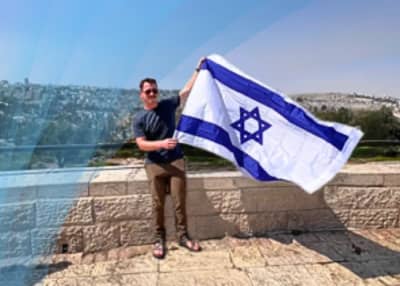
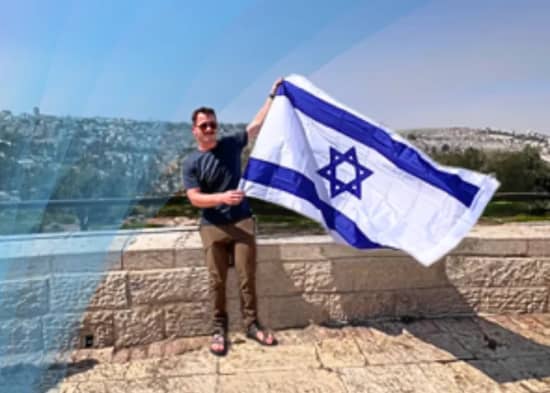
I’m from Utah—a fourth-generation Shapiro born and raised in Salt Lake City. Being Jewish in Utah means standing out, but it’s made my pride that much stronger. My great-grandpa emigrated to the U.S. from the Ukraine–Lithuania area around 1900 and made it to Salt Lake City about a decade later, where he met and married my great-grandmother—a well-educated Jewish woman from Colorado with degrees in literature and art history. That began a line of proud, opinionated Shapiros who were always involved in the synagogue and the JCC.
For college, I went to the University of Montana in Missoula—another small town with a small Jewish population. To practice Judaism there, I had to go out of my way. I found a Chabad house and built a great relationship with the people there. That experience actually turned my Judaism, which had always been very communal and family-oriented, into something much more personal. It was me deciding: “It’s Friday night. Let’s go do Shabbat.” At the end of the day, we’re all part of the Jewish people—you get together, and it works out.
I had never been to Israel before Birthright Israel. I’d been trying for years. Something was always in the way—school, work, athletics, then COVID, then the war. But I always felt a magnetizing need to go. I wanted to touch the dirt, smell the air, meet the people. Until I experienced it myself, everything was secondhand. When I finally got there, that magnetizing need was replaced with something stronger—a hard, fast connection.
When I met my group at the New York airport, we were all strangers. But within 24 hours—after going through El Al’s check-in, the flight, the bus ride, and arriving at the beach in Caesarea—we were already close. That set the tone for the trip. We were a small group of 15 or 16, coming from different walks of life, but all proud Jews in our own ways. The trip created a space where each of us could be so unapologetically ourselves. I got to be purely Andrew—present, alive, embracing everything.
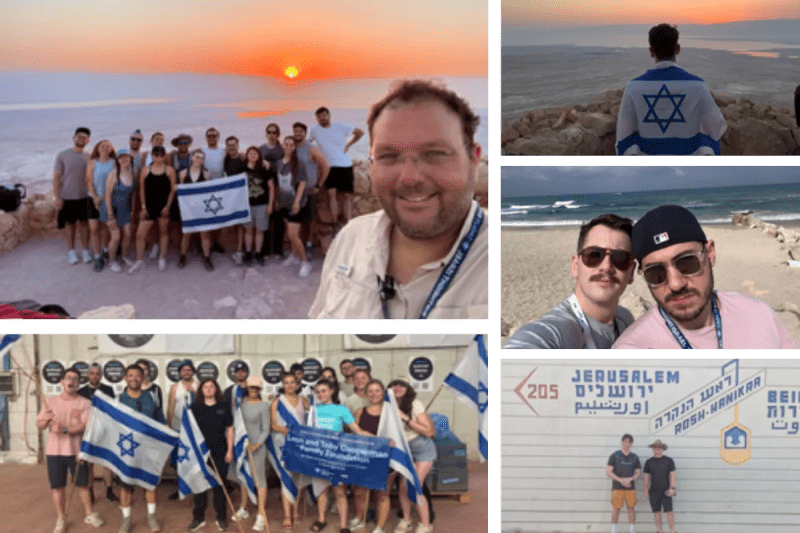
The itinerary was incredible—ten days of excitement, happiness, sadness, joy, culture, food, music, spirituality, and connection. We started in the north: the Sea of Galilee, the Golan Heights. I love mountains and seas, and I couldn’t stop noticing the similarities between Utah and Israel. The scenery, the water—the Kinneret, the Dead Sea, the Mediterranean—all of it brought me life.
One of my favorite moments was taking ATVs up a mountain in the Golan and looking out across the horizon. In one view, you could see Israel, Syria, and Lebanon. It was incredible. And then we went to Jerusalem. We were lucky to spend four nights there—longer than most groups—and that’s when our Israeli peers joined us. They changed the whole dynamic. They were only with us for three nights, but their presence transformed the trip.
I have to mention two people: Ido Shiraf, our 22-year-old security and medical escort, and Guy, our guide. Ido is in a high-level IDF unit. The things he’s seen and experienced are beyond what most of us could ever comprehend. At first, he told us he was nervous to join an older group—worried we’d think he was just a kid. But he took us in, and we took him in. We’re still close. He shaped my entire understanding of bearing witness. And then there was Guy, our guide. I don’t think we could have been luckier. Guy became almost like a fatherly best friend. His knowledge and love for the land, history, and people created an environment where we could question, learn, and grow. He made every single stop momentous.
Arm in arm, we walked through Mount Herzl Cemetery in Jerusalem, a place designed with such intention and beauty that it takes you through layers of life and love. Then, we stood at the site of the Nova festival massacre. Both moments were unforgettable. Through Ido’s eyes—and through our other Israeli friends—we gained firsthand understanding. They took us to visit a friend’s grave and shared their stories, their pain, and their love. The Nova site had a powerful energy—a frequency in the wind and trees, a haunting beauty. It’s still fresh, still sacred. To be there with people who had become so close to me—it wouldn’t have been the same without them.
When we visited Kfar Kama, the Circassian town, I’d never heard of the Circassians before. I was blown away and truly educated. Our guide, Lian, was only 20, but she was extraordinary—intelligent, warm, and spoke four languages fluently. She told us about the Circassian community’s history of persecution that led to their safe haven in Israel. Walking through their town, seeing how their culture and architecture blend into Israeli life, and realizing how proudly they serve—in the army, in government—was amazing. What struck me most was that these are not Jewish people, yet they live fully and freely as Israelis. Seeing that coexistence up close—the pride, the respect, the shared sense of belonging—was deeply moving. It was one of the highlights of the trip.
By the end, my magnetizing need to get to Israel turned into a lifelong connection—an unbreakable bond. It completed something that had been incomplete within me. It encapsulated the love, ideals, virtues, and morals that make me who I am as a Jew and as a child of Israel. I can see myself being in Israel regularly—even living there. I developed such love and respect for Israeli servicemen and women. Back in high school, I once thought about moving to Israel and joining the army. Pieces of that came back. The service of Israel truly calls to me.
On a spiritual level, I found a tangible anchor. I was davening at the Western Wall in Jerusalem, and a month and a half later, davening at my shul in Salt Lake City for Rosh Hashanah. With Israel so fresh in my mind and heart, I could close my eyes and feel like I was back at the Wall. It changed the way I pray.
I traveled north to south, east to west, walked the streets, met people. Even though the war had left its mark, I never once questioned my safety or peace. I was completely at ease—mentally, physically, spiritually, emotionally. I hadn’t planned my travels around war, but I truly believe it was the right time to go. I wouldn’t have done it any other way.
If I could speak to the donors who made this trip possible, I’d express immense gratitude. I’d show them the thousands of photos on my phone—place by place—so they could see what their generosity created. Theirs was a donation of not just money, but also soul, time, love, and gratitude. Their giving also created our giving. We had opportunities to volunteer—packing resource boxes for displaced families, making food for soldiers on base. Their support made that possible.
I’d love to give back—whether through my time, support, or by staffing a future trip. I’m so excited that Birthright Israel will soon send its millionth participant to Israel. Unreal. I’d love to be part of that in any way I can. Because of this experience, I want to keep giving back.
Related Posts

Birthright Israel Honors Jewish Leader and Philanthropist Jeff Solomon
On December 12, 2024, Birthright Israel Foundation and its friends and supporters gathered at the Ha...

Can Birthright Israel Truly Strengthen the Jewish Future?
You may have heard us say this before: Birthright Israel is strengthening the Jewish future. But Wha...

Elias Saratovsky on How Birthright Israel is Transforming Jewish Life (Podcast)
Birthright Israel Foundation President & CEO Elias Saratovsky joined Jewish Funders Network’s What G...

Rediscovering My Jewish Roots on Birthright Israel
Birthright Israel was a life-changing experience for me. I found out about this opportunity by getti...