

July 8, 2025
Birthright Israel Sparked My Path to Jewish Leadership
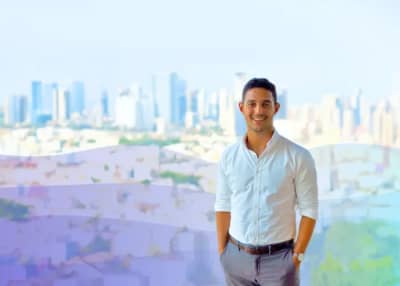
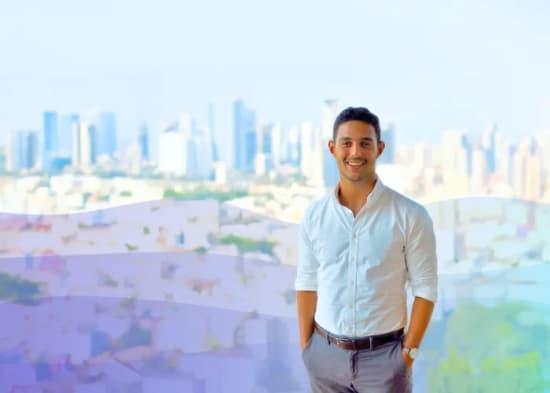
I live in Manhattan, where I’m part of the leadership team at a software infrastructure and technology company. My family is originally from Kyiv, Ukraine. They fled after Chernobyl, first to Israel, and then finally to Toronto, Canada, where I was born and raised. I’ve walked a path that’s taken me deeper and deeper into Jewish life, something that truly began with Birthright Israel.
Growing up, I thought of myself as Ukrainian/Russian first, Jewish second. I never went to Hebrew school. And yet, something inside me was curious. Whenever I was around a synagogue or Chabad, I felt at ease. Having a Bar Mitzvah was my choice and I had invited twelve friends, only two of whom were Jewish. It was a small celebration, but it mattered to me. I was searching for a connection I didn’t fully understand.
My family rarely talked about Israel: their relationship to it was complicated. They landed in Israel around 1990, but their time coincided with the Gulf War. They’d hoped for a better life, but found themselves under constant threat: air raid sirens, bomb shelters, fear of a chemical attack. The stress was overwhelming for them. There are photos of my older sister as a young child, wearing a gas mask – an image that will personally stay with me for the rest of my life.
Through it all, my sister still loved Israel, the people, the culture, and the sense of pride. After going on Birthright Israel, she came back inspired. She said it was the best experience of her life. She encouraged me to go, despite my parents’ reservations. I told them I needed to see it for myself and learn more about my family history.
So, in 2014, I signed up for Birthright Israel. That decision inspired a change in my life. I still remember how it felt to see the Kotel for the first time. It was a wave of emotion — physical, mental, and spiritual, all at once. I thought about my parents and everything they’d gone through. I thought about my grandparents, our history, our resilience. That moment set me on a path for the next decade.
There were other moments, too. Sleeping in a Bedouin tent under the stars. Singing with Israeli soldiers I’d only just met, but somehow felt deeply connected to. Hiking up Masada at sunrise and learning the history of Jewish resistance and perseverance. Throughout the trip, I kept retracing my parents’ steps — especially when we got close to Haifa, near where they had lived. I called them constantly to ask questions. It made everything feel real.
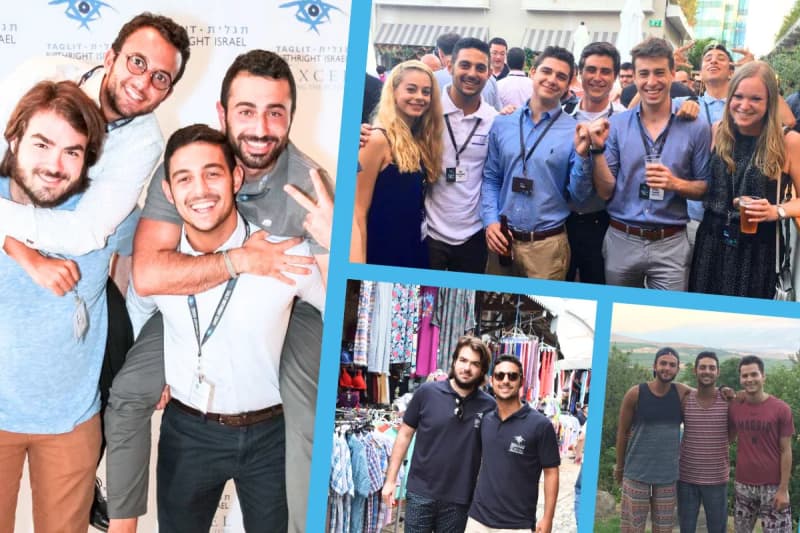
Two years later, I participated in Birthright Israel Excel — and that program, too, was truly life-changing. For the first time, I met people who were not only ambitious and intellectually curious, but also passionate about Israel and deeply engaged in Jewish life. There were Orthodox Jews, Reform Jews, and everything in between, but we shared a deep bond. We were proud to love Israel. We were proud to be Jewish. And we were proud to build our futures around that identity.
One moment in particular during the Excel summer deeply affected me. We watched a documentary called The Gatekeepers about the heads of the Shin Bet, the Israel Security Agency. One of them, Yaakov Peri, came to speak with us. The film covered the exact years my parents had lived in Israel. It was the first time I really understood what they had gone through. That night, I called them and asked questions I’d never asked before. It was a breakthrough moment in my relationship with them and with my own history.
Growing up, I thought Judaism was binary: you were either religious and lived in a black-hat world, or you were completely secular like me. But during my time on Birthright Excel, I encountered a powerful middle path. Inspired by the people I met, I immersed myself in Jewish learning. As I moved between Toronto, Los Angeles, and New York for work, I gradually took on Shabbat traditions and often hosted Shabbat dinners, creating space for rest, connection, and community. Since that summer I’ve found myself learning regularly with a Rabbi, attending services and incorporating mitzvot like putting on Tefillin. I’m not fully religious, but I’d say I’m traditionally observant. I’m proud to have a Jewish home, to live a life of Jewish values, and to raise a Jewish family one day.
Birthright Israel Excel also expanded my view of what leadership in the Jewish world could look like. When I returned to Toronto, I joined the Birthright Israel Canada board and helped launch the Young Leadership Council. After moving to the U.S., I became Chairman of the North American Leadership Board of Birthright Israel Excel, where I led efforts to connect emerging Jewish leaders across the diaspora and deepen our collective ties to Israel through shared experiences, professional collaboration and opportunities to give back.
That’s what Birthright Israel does: it gives people like me a place to start. Through these experiences, Israel became one of my core values, and a central part of my identity. They’ve made me think deeply about how to support Israel. I’ve now been back to Israel almost every year since my original Birthright Israel trip. For Excel, for weddings, for work, for vacation. Every time I go, I see my Israeli friends from Excel, and make sure to visit the Kotel so I could feel that sense of clarity again. That sense of connection. That sense of coming home.
Birthright Israel made me want to lead by example and to give back. To support Israel however I can, and to inspire others to do the same. Whether it’s financially, through community, or through education, I want to be part of a movement that ensures the next generation is even more connected, inspired, and proud.
If you’re wondering whether to support Birthright Israel, I’ll say this: there has never been a more important time. The world is becoming more hostile to Jews and to Israel. We may be small, but we are mighty. Without Birthright Israel — and the more than 900,000 young Jews it’s sent to Israel since 1999 — we would not have the Jewish strength we do today. And that’s worth investing in.
If you can give one person what Birthright Israel gave me — if you can give them the feeling of that first moment at the Kotel, and help them find their Jewish voice — then you haven’t just changed one young person’s life. You’ve changed the course of Jewish history.
Related Posts

Birthright Israel Honors Jewish Leader and Philanthropist Jeff Solomon
On December 12, 2024, Birthright Israel Foundation and its friends and supporters gathered at the Ha...

Can Birthright Israel Truly Strengthen the Jewish Future?
You may have heard us say this before: Birthright Israel is strengthening the Jewish future. But Wha...

Igniting the Spark of Leadership: Birthright Israel Excel
Imagine a summer program that ignites the spark of leadership in young Jewish business minds. A prog...

Rediscovering My Jewish Roots on Birthright Israel
Birthright Israel was a life-changing experience for me. I found out about this opportunity by getti...