

December 30, 2025
“We Have a Home”: Why Birthright Israel Matters
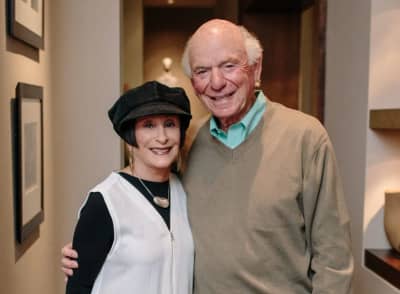
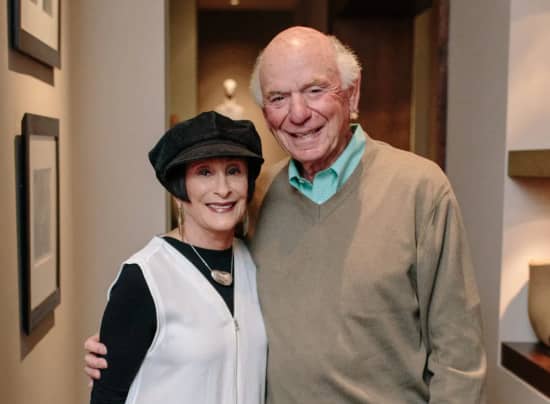
I’ve spent about 40 years involved in different Jewish philanthropic organizations, and I’ve learned a lot—some of it inspiring, some of it frustrating, and most of it complicated in the way only Jewish life can be complicated. At the end of the day, I try to look at the broader picture of where we are as a people, what’s happening around us, and what kind of future we’re building.
I grew up in a Modern Orthodox home with no money. My grandparents came from Eastern Europe—one from Lithuania, one from what was then Russia and is now Ukraine. My grandfather never made more than $50 a week. But Judaism wasn’t theoretical in our house. It was lived. It was Shabbat. It was holidays. It was kosher. It was community. And it was giving, even when you didn’t have much to give.
One of the most vivid memories I have from childhood is the Jewish National Fund pushke. I had to put my pennies and nickels into that little blue tzedakah box to plant trees in Israel. And once the coins went in, you couldn’t get them out. Every Friday, around three o’clock, a man would come to our apartment with a big sack on his back. There was a lock at the bottom of the box. He’d open it, empty it, and hand us a new one.
As a kid, I didn’t understand Zionism in any sophisticated way. I didn’t know history the way I know it now. I just knew that we were planting trees. I knew that part of being a Jew was putting something aside—again and again—for something bigger than yourself.
The first time Israel really became real to me was through Jewish summer camp. In the late 1940s, when I was about 11, we’d wake up in the morning and they’d raise two flags: the American flag and the Israeli flag. We sang the national anthem, and we sang Hatikvah. We did Israeli dancing. We learned what Israel was supposed to represent: home, pride, survival, possibility.
There is one story I tell often, because it explains something essential about Jewish identity, and it explains my connection to Israel better than any speech I could give. I ask people: What’s important about November 29, 1947? Most people don’t know. That was the day the United Nations voted for partition—the decision that made the establishment of the State of Israel possible. It was a Saturday. Shabbat.
I came home from a youth service that afternoon and found my grandfather sitting at the kitchen table listening to the radio. He had a pencil and paper in his hand and he was making marks—checking boxes, keeping track of the vote.
I said to him, “Pa, it’s Shabbos. You can’t listen to the radio.”
He held up his hand like this—stop.
Then I said, “Pa, you can’t write. It’s Shabbos.”
He held up his hand again.
And then he started to cry.
I had never seen my grandfather cry. He was a tough man, old-world, not sentimental. But he was crying because he understood what was happening in real time.
He looked at me and said: “We have a home.”
I went to Israel for the first time in 1971 for work. I was working for a hotel company, and I was sent there to help with marketing and strategy for hotels they were building. I didn’t know the country the way I do now. But I loved it. I loved that I felt comfortable in a way I didn’t always feel in America. I’d had antisemitic incidents in my life—not constant, but enough to remind me that you can be fully American and still be seen as “other.” In Israel, I felt something different: a kind of ease. A kind of belonging.
And I loved what Israel represented—this tiny piece of land, the size of New Jersey, accomplishing things on a global scale that make no sense if you only look at geography or population. In research, science, technology, medicine, defense—Israel overachieves in the way Jews have always overachieved. We are a dot on the map, but the noise level is enormous.
And I don’t say that arrogantly. I say it like a fact that comes with a price.
Because when you play above your weight, you attract attention. Antisemitism never goes away. You can mitigate it, but it never fully disappears. That’s human nature. People resent groups that overperform. And we’ve always overperformed. So the question becomes: How do we make sure Jews keep choosing Jewish life anyway?
I’ve come to believe there are three foundational experiences that build Jewish identity: 1) Jewish day school, 2) Jewish summer camp, and 3) a trip to Israel. If every Jewish child had at least two of those three, we wouldn’t be panicking about Jewish continuity. We wouldn’t be panicking about support for Israel. There is enough Jewish money in the world to make this possible. We just haven’t chosen to do it. And that brings me to Birthright Israel.
Here’s the irony: I didn’t know about Birthright Israel when it began. My kids were already grown. They weren’t going on Birthright trips. But once I got involved, I stayed for about a decade. And I watched Birthright grow from around 15,000 participants a year to something like 48,000 a year. Back then there was no Onward, no Excel, no Volunteer program. It was just the 10-day trip. Today it’s a platform with multiple paths, and close to a million young Jews have gone.
Birthright does something no other Jewish organization does at the same scale: it gets young Jews’ feet on the ground in Israel. It turns an abstract idea into lived experience. It takes Israel out of the news cycle and puts it into a person’s body—walking the streets, meeting Israelis, hearing Hebrew, seeing what this tiny country has built.
And the impact is measurable. Birthright is one of the only Jewish organizations I know that has 20 years of serious research tracking outcomes. It shows what many of us already sense: that the trip increases Jewish pride, increases connection to Jewish community, increases connection to Israel, and makes people feel part of something bigger than themselves.
That “something bigger” matters. Because we are only about 15 million Jews in a world of eight billion. A rounding error. And yet we carry an identity that has survived empires, expulsions, pogroms, genocide, and constant reinvention.
If someone asked me why they should give to Birthright Israel, I’d say this: Birthright is the most effective and proven way to build Jewish identity at scale. It is a direct investment in Jewish continuity and the Jewish future.
And I’d add something else, something I believe deeply: A Jew is a visitor in every country in the world… except Israel. That doesn’t mean everyone needs to live there. I don’t live there. But every Jew needs to understand what Israel is and why it matters. My grandfather understood it so clearly he broke Shabbat to listen to the UN vote. “We have a home,” he said.
Birthright Israel makes sure the next generation can say that sentence with pride and know exactly what it means.
Mike Leven is a legendary business executive and visionary philanthropist. Inspired by Warren Buffet’s and Bill Gates’ Giving Pledge, Mike founded the Jewish Future Promise to carry on his family’s commitment to Judaism. Mr. Leven currently serves on the boards of the AEPi Fraternity Foundation, Jewish National Fund, and the Marcus Foundation, and is an honorary board member of the Birthright Israel Foundation.
Related Posts

Birthright Israel Honors Jewish Leader and Philanthropist Jeff Solomon
On December 12, 2024, Birthright Israel Foundation and its friends and supporters gathered at the Ha...

Can Birthright Israel Truly Strengthen the Jewish Future?
You may have heard us say this before: Birthright Israel is strengthening the Jewish future. But Wha...

Elias Saratovsky on How Birthright Israel is Transforming Jewish Life (Podcast)
Birthright Israel Foundation President & CEO Elias Saratovsky joined Jewish Funders Network’s What G...

Rediscovering My Jewish Roots on Birthright Israel
Birthright Israel was a life-changing experience for me. I found out about this opportunity by getti...