

April 14, 2026
Lessons in Caring From a 13-Trip Birthright Israel Madricha


I was born and raised in Pittsburgh, Pennsylvania. I am a former pre-professional ballet dancer with an intense love for reading and writing, a soft spot for crafts, and a burning passion to see and change the world.
My Jewish identity was rooted in questioning, learning, and a strong but impersonal connection to Israel. I grew up being told Torah stories at bedtime, and I can quote entire chapters of Tehillim from memory. I read Number the Stars and The Diary of Anne Frank in middle school. But I didn’t feel personally connected until a fortuitous encounter in New York City changed everything and put me on the path to leading over a dozen Birthright Israel trips.
When I was sixteen, I visited New York to compete in the finals of the Youth America Grand Prix (a world-famous ballet competition), and I went shopping for a prom dress in a series of consignment shops on the Upper West Side. In one shop, the glittering spine of a book caught my eye: it was a Haggadah. When I took it to the front of the shop to purchase it, the cashier asked me whether I had signed up for my Birthright Israel trip yet. Although I wouldn’t be eligible for another two years, I started a countdown on my phone, reminding me to “Sign Up for Birthright” when I turned eighteen.
My Birthright Israel trip was a life-altering experience. I enjoyed everything: my co-participants, both American and Israeli, the three kibbutzim we stayed on, the two Shabbatot we shared, the nights out in Tel Aviv and Jerusalem, and how we all supported each other when we heard a rocket siren. However, I was impacted most deeply by my Madricha, Becca Goldstein. She was so incredibly knowledgeable and patient. She knew when to help us burn off energy and how to help us refocus for a serious moment. She knew when to sing and dance with us on the bus, and when to sit next to us quietly for a meaningful conversation. She seemed to know exactly who she was, her place in the world, and her responsibilities. I looked up to her and wanted to inspire others in the same way. When I asked her how she became such a good Madricha, she told me about Birthright Israel Fellows, yet another program I was too young to sign up for at the time—and another countdown timer was started.
I returned for Birthright Israel Onward in 2021 and participated in a geopolitical leadership delegation that same summer. I was hooked. I applied to staff a Birthright Israel trip the morning of my 21st birthday and was approved to staff with Shorashim. I was beside myself with happiness; the trip was slated to depart the day after I graduated from college.
My first time staffing a trip, I relied heavily on Becca’s model, and while it was fun, I still had much to learn. Birthright Israel Fellows was where it all came together for me. I got a crash course in immersive experiences and education. I was given tools, both mental and physical, to help facilitate the kind of experience I was privileged to have. I heard from so many experienced Madrichim, which helped prepare me for all kinds of craziness that could occur on the trips. Most importantly, I ended up meeting one of my most prolific co-staffers, Ami Alpert, with whom I staffed four trips to date.
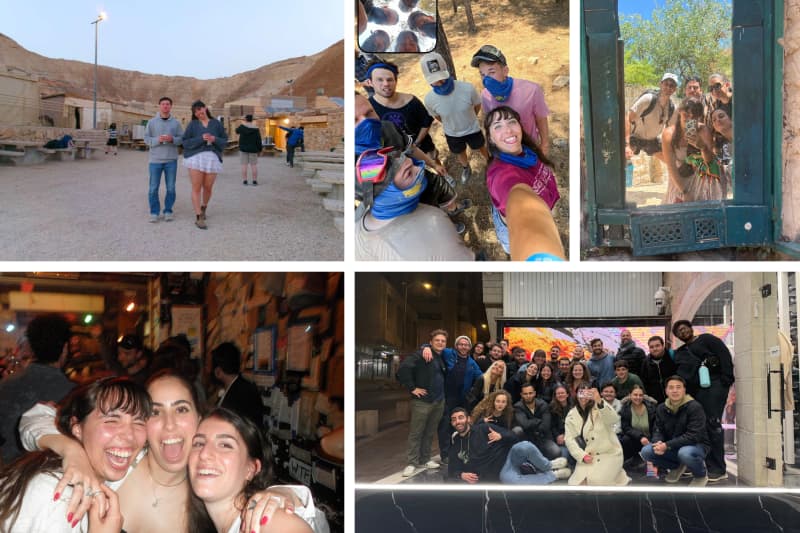
As amazing as Birthright Israel Fellows was—and it led to me staffing another three trips before October 7—my trip in January 2024 was entirely different. I wasn’t sure how to help participants process the tragedy, or even how I felt at the time. I heard about a novel program Birthright Israel would be running called the Educator’s Forum. The Educator's Forum made me better able to support participants post-October 7. These training experiences helped me realized that the most important responsibility of a Madricha is to care. Caring is hard to teach. However, it’s vital to invest in Madrichim through trainings that help them feel equipped to share their authentic care with participants. Participants truly appreciate it when their staff care for them, and care about what they are seeing and doing.
As a veteran Madricha, I know the responsibility of leading a trip can feel petrifying. It feels like so much of a participant’s connection to Israel and Judaism depends on you. On the first few trips I staffed, I was often unsure of what to say or do. But after one participant opened up to me about their less-than-ideal home life and how they came on Birthright Israel to escape, I realized that the most important thing I could do was care about my participants and show them how much I loved being alive, happy, and Jewish. Over time and having led many trips, my own identity continues to solidify. I pray that when participants come to Israel with me, they will leave feeling loved by me and that they have a place alongside me in the Jewish people. I mean, don’t get me wrong: I also hope they think Jerusalem is the best place on earth.
I have many cherished memories from my trips. Until recently, my returning, learning, and leading came from a desire to pay forward my original Birthright Israel experience. However, something changed on my 12th trip, which took place in June 2025, when everyone had to be evacuated from Israel by boat to Cyprus. This trip led to a now-iconic phrase: “Welcome to day 19 of our 10-day Birthright Israel trip.” When we were trapped in a bomb shelter, I felt like a first-time staffer again—I wasn’t sure what to do. But I was not about to let Iran tell us how to be Jewish in the Jewish State. I led activities and shared resources with other staffers. It was amazing to see the participants’ conversations about Jewish identity, Jewish life in practice, the future of Israeli security, and many other topics. I saw how participants trust the Madrichim with their lives. It was not easy, but it was deeply meaningful.
After my most recent trip in January 2026, I participated in the Madrichim Training Seminar. I was excited to see so many like-minded individuals all in one place. The Madrichim Training Seminar was the most unique of all my training experiences, and one of the most mentally stimulating. We discussed the “big questions” of Israel, Birthright Israel, and Jewish identity that have surfaced over the last two and a half years. I was able to engage so deeply with the content at the Madrichim Training Seminar because it had logically built on the experiences of my past training and staffing trips.
When I was a participant, Israel felt like a kind of Disney Land. But after living in Israel and visiting many times, I have a more nuanced understanding of Israel as envisioned by Theodor Herzl, a land where dreams can become a reality, but nothing is ever quite perfect. I admit—I still feel a deep ache when bringing first-time visitors to Israel after October 7. But their hope and enthusiasm help me continue to press forward into the future.
To Birthright Israel, I owe my entire present career, most of my friends, a large part of my education, and will also likely owe my future husband and family. That conversation with the lady at the Upper West Side consignment shop led to my first Birthright Israel trip, which led to another, and another, which led to my first job, which led to my master’s degree, which led to my next job, and almost every other opportunity I have pursued since the age of 16. If I’ve had a fraction of that impact on the life of even one of my participants, then I will consider everything that I have done a success. My role as a Jewish communal professional allows me to shape the Jewish future I have glimpsed on Birthright Israel trips, and my role as a Madricha gives me a jolt of reinvigoration and purpose with every trip.
“Kol Israel arevim zeh b’zeh.” | “All Israel is responsible for one another.”
This is a statement that comes to life on Birthright Israel, across all kinds of moments—from Israelis pointing out to the Americans where the bomb shelter is, to dancing together at a b’nei mitzvah in Jerusalem, to lasting friendships forming and participants staying in touch months and years after their trip.
I see my role in nurturing that sense of belonging as a demonstration of my own Jewish joy, in which participants can find pieces of themselves. I have been blessed with an understanding of Americanness, Israeliness, Jewishness, Diaspora and other identities. That helps me convey familiarity and comfort no matter whom I am speaking with, thanks to my Birthright Israel experiences and training.
If I could speak to the donor who made my Birthright Israel experience possible, I would thank them for caring enough to do something to build the Jewish future they want to see. We must not let the future pass us by. As Birthright Israel donors, Madrichim, and participants, we are all taking an active part in shaping the Jewish future.