

October 9, 2025
Why I Became a Birthright Israel Recruiter
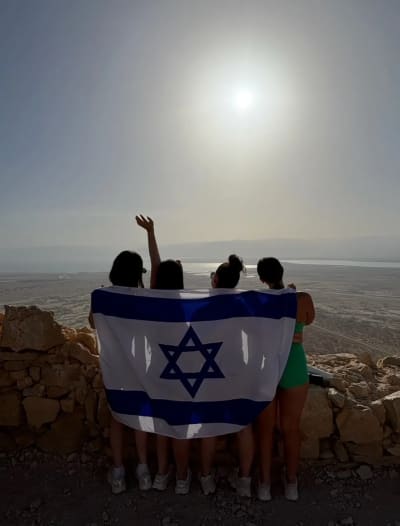
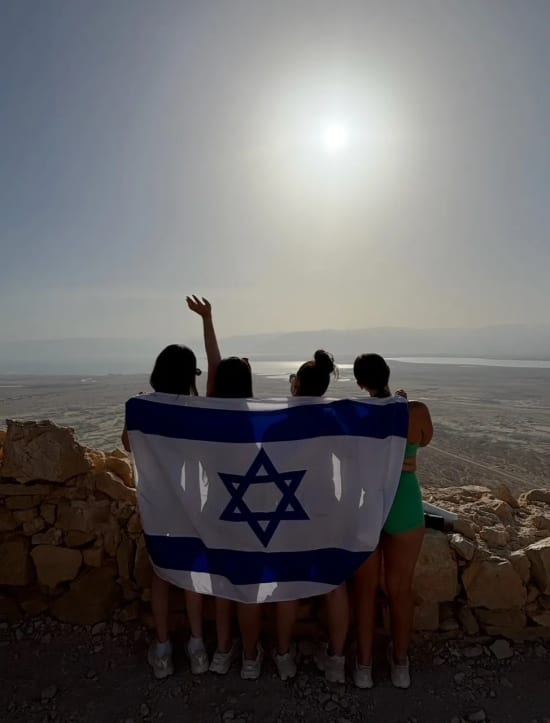
I grew up in Buffalo, New York, in a place where being Jewish wasn’t the norm. Most of my classmates celebrated Christmas, and during Passover or Rosh Hashanah, I was often the only one missing school. My parents had enrolled me in Hebrew school to instill those Jewish values I was missing, and I spent summers at a Jewish camp where, for 2 months each year, I felt surrounded by people who understood me. I celebrated my Bat Mitzvah, learned the prayers, and our family always made a point to observe the High Holy Days. Those rituals anchored me, but outside of those spaces, I often felt like I had one foot in and one foot out of Jewish life. Judaism was something I was proud of, but it wasn’t something I carried with me every single day.
Israel, for me, felt even farther away. I knew about it through Sunday school lessons and holiday sermons, but it wasn’t personal. I thought of it almost like a relative you’ve heard stories about but never met. That’s why Birthright Israel drew me in. I didn’t just want to “see the sights.” I wanted to know what it would feel like to step into the place I had only imagined and finally meet that relative face-to-face.
When I arrived in Israel in May 2025, the first thing I noticed was the sound. The airport was buzzing with Hebrew, words I had struggled to pronounce in Hebrew school were suddenly alive all around me. On the bus ride into Tel Aviv, I looked out the window and saw mezuzot on nearly every doorway, kosher signs on restaurants, and kids walking home from school with kippot on their heads. For the first time in my life, I wasn’t the minority. That simple realization, “I’m not alone here,” brought tears to my eyes.
One of the most meaningful experiences for me was volunteering on a kibbutz that was attacked on October 7th. I remember waking up early, the sun just starting to rise over the fields, and feeling the quiet hum of community life beginning around me. I was assigned to help in the fields, pulling weeds and planting vegetables alongside Israelis who had grown up there. The work was physical, but there was something deeply spiritual about it, too. I kept thinking, “This is what it means to contribute, even in the smallest way, to a story that started long before me.”
At lunch, I sat with a woman who had lived on the kibbutz her whole life, and she told me, “Here, everyone depends on each other. It’s not about what you own, it’s about what you share.” That conversation stuck with me, and I realized that the values of community and resilience I had always associated with Judaism weren’t abstract, they were being lived out in front of me.
The most emotional moment of the trip, though, was visiting the Nova music festival site. I had seen news coverage of October 7th, but nothing could have prepared me for standing there in person. The air was heavy with silence, broken only by the wind moving through the memorial displays. Families had left photos, flowers, and handwritten notes. I remember stopping at one note left by a parent for their child, it simply said, “We love you. We miss you. You’ll always dance with us.” Reading those words in the very place where joy had turned to horror, I felt my chest tighten in a way I can’t describe.
We gathered as a group, and our guide asked us to stand quietly for a few moments. I closed my eyes and tried to imagine the music, the laughter, the feeling of freedom people must have had that night before everything changed. When I opened them again, I realized I wasn’t just crying for the lives lost, I was crying for the fragility of joy, for the resilience it takes to keep living, and for the strength of a people who refuse to be broken.
That site changed the way I saw not only Israel, but also myself. I left with a new responsibility: to remember, to share, and to carry forward the stories of those who no longer could. Being in Israel after October 7th was difficult. There was a visible grief that touched everyone we met. People carried it in their eyes, in the way they spoke, in the way they hugged one another just a little longer. But alongside that grief, there was strength. Families still gathered for Shabbat dinner. Markets still bustled with life. Kids still played soccer in the street. It was a lesson I will never forget: even in the shadow of loss, Jewish life persists.
When I came back home, I realized just how much Birthright Israel had transformed me. I no longer felt like Judaism was something I dipped in and out of depending on the season or holiday. It became something I carry proudly every day. That summer after Birthright, I spoke on a panel in Buffalo about my trip, sharing what it meant to stand at the Nova site and to see Israel with my own eyes. The response from the audience reminded me that my story mattered, and that by sharing, I could help others feel connected, too.
On campus, I’ve become more involved with Jewish organizations, not just attending events but stepping into leadership roles. I want to create the same welcoming spaces for others that I once longed for myself.
If I could speak directly to the donor who made my Birthright Israel experience possible, I would tell them that their generosity didn’t just give me a trip, it gave me a new chapter in my life. Because of them, I got to see Jerusalem lit up on Shabbat, to place my hands on the stones of the Western Wall, to volunteer on a kibbutz, and to honor the memories of lives lost at Nova. Because of them, I came home feeling more connected to Israel and to myself.
I would say: thank you for investing in my story, and in the stories of countless others. What you’ve given us doesn’t end with ten days in Israel. It lives on in how we carry ourselves, in how we lead, and in how we inspire the next generation.
That’s why becoming a Birthright Israel recruiter felt like a natural next step. I want other students to have the chance to feel what I felt, to experience Israel not as an idea or a headline, but as a living, breathing home. Every time someone I’ve spoken with comes back from their trip and tells me, “That changed me,” I feel like I’m part of something bigger. Being a recruiter isn’t just about filling spots on a bus; it’s about creating opportunities for transformation.
Birthright Israel gave me a sense of belonging that I had always been searching for. It reminded me that being Jewish is about community, resilience, and hope, as well as history and tradition. That’s the gift I carry forward, and it’s the gift I want to share with others for the rest of my life.
Related Posts

Birthright Israel Summer 2024 Program Snapshot
Did you know that 13,500 Jewish young adults will take part in Birthright Israel programs this summe...

VIDEO: My Birthright Israel Trip Explained
Lindsay Nathanson is a 2019 Birthright Israel alumna from Philadelphia, PA. She is currently studyin...

Discovering the Real Israel on Birthright Israel
Growing up in Massachusetts, my family went to temple every so often. I started going less and less ...

Birthright Israel Resumes: Video of the First Trip to Israel
Birthright Israel is excited to announce their first group arrived in Israel on May 24, 2021, after ...