
August 21, 2025
Birthright Israel Opened My Eyes and Made Me a Global Activist
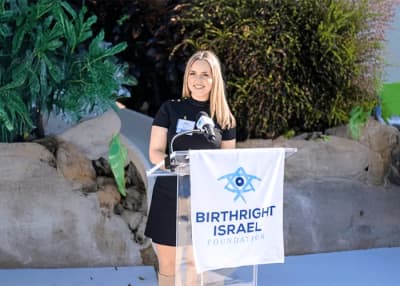
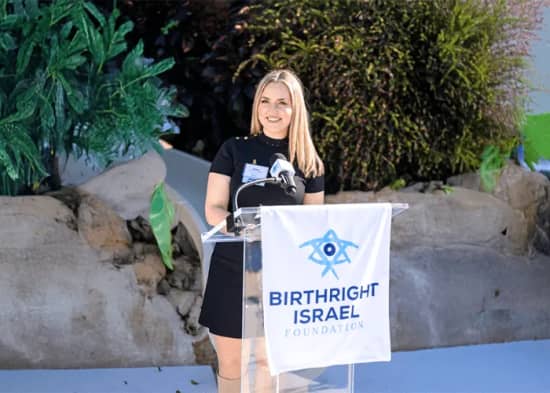
I was born in Canada to Israeli parents who had left Israel before my birth. My three brothers were born there. My parents were very Zionist, but they immigrated because my dad had PTSD from the Yom Kippur War, and didn’t want his sons to go into the army and experience what he went through. At home we spoke Hebrew, and we visited my extended family in Israel every year. So, I always felt Israeli. despite growing up in Canada.
I went to a Jewish day school, but even there, I felt like no one else was as Israeli as I was. I was kind of embarrassed about having immigrant parents, and really tried to assimilate. When I was 13, I told my parents I didn’t want to go to a Jewish school anymore. I wanted to go to public school and have a diverse group of friends. I didn’t like that I only knew Jews.
When I went to university, although I got into the best business programs in Canada, I chose a small school called Wilfrid Laurier University in a small town where there were barely any Jews. Within my first few days on campus, I had my first antisemitic experience.
We were doing an “open dorm” day, walking into each other’s rooms, and everyone had taken off their shoes. As an icebreaker, someone asked what foreign languages we spoke and I said, “I speak Hebrew.” One guy asked, “Why do you speak Hebrew?” I said, “Because I’m Jewish, and my parents are Israeli.”
Then he asked, “Which are your shoes?” I didn’t understand what that had to do with anything, but pointed out my shoes. He picked them up, walked to the window, and threw them out. “Get the fuck out of my room,” he said. Then he called me the k-word — which I’d never even heard before. Everyone in the room went completely silent.
I was so embarrassed. When I got back to my dorm, I googled the word he’d used. That’s when I realized: Oh. That was antisemitism. Maybe I shouldn’t tell people I’m Jewish.
That fall, I turned 18. One of the only other Jewish students I knew — he’d been on Birthright Israel the year before — said I should go. I didn’t know much about it. I thought, I’ve been to Israel a million times with my family. I don’t need this. But he kept saying, “It’s really fun. It’s free. It’s not just Israel — it’s Jews from around the world.”
Eventually, I said okay. I asked a girl in my class to take notes while I was gone. I hesitated to tell her where I was going. I didn’t want to say Israel. But she was nice, so I told her. And her reaction shocked me: “Israel?! Oh my God, the Holy Land!” Then she asked, “Are you Jewish? Like Jesus?” And I was like… yeah, I guess.
She told me I was the first Jew she’d ever met. Then she asked if I’d been to the Galilee. She asked all these questions. Finally, she said, “Can I ask something? I don’t mean to offend you.” I said sure. She said, “Did it hurt when they…?” I laughed and said, “Oh, no, that’s only for boys, when they’re just a few days old.” She said, “So only boys have them?” I was totally confused. I said, “Wait, what are you talking about?” She said, “Did it hurt when they cut off your horns?”
She was serious. She actually thought Jews had horns and tails. She wasn’t even antisemitic, just ignorant. I realized that most people on my campus had never met a Jew. And that maybe I should go on this Birthright Israel trip after all. So, I went.
I had two deeply impactful moments on Birthright. The first was Shabbat on a rooftop overlooking the Kotel. Our small Canadian group was with a group from Argentina. We sang “Shalom Aleichem” together, and everyone knew the same tune. And it hit me: Jews all over the world are the same. It was the first time I felt something spiritual at the Kotel. Before, with my mom, I thought it was just a pile of stones. But that night, something shifted.
The second moment came while driving on Highway 6. The guide pointed out the security barrier — the wall. I didn’t even know what it was. He explained it had already reduced terror attacks by 400%. I remembered why I hadn’t gone to Israel during the Second Intifada—because buses were exploding. And I thought: this wall is why I’m able to be here now.
Then I went back to campus — and saw my first “Israeli Apartheid Week.” Sure enough, there was a fake wall replica with graffiti all over it, flyers accusing Israel of ethnic cleansing and genocide. I walked up and asked, “Why are you talking about the wall without talking about the suicide bombings?” Some guy started screaming at me. I didn’t know what to say.
I took their flyers. I went back to my room. I read about the Nakba, the refugee crisis. I wondered, “Was I just on a propaganda trip?” I called my mom and asked, “Why do people say the settlements are illegal?” Her answer: “It can’t be illegal. God gave it to us.” I thought: that’s not a real answer.
So, I started researching. The only book I could find on my campus with “Israel” in the title was Alan Dershowitz’s The Case for Israel. I read it. I felt relieved — but also skeptical. So, I read more pro-Palestinian writers, too: Benny Morris, Norman Finkelstein. I ended up with a nuanced view: maybe Israel wasn’t perfect, but the narrative I was seeing on campus was distorted. It bothered me that people were lying, and I intuited that there was an organized campaign on campus to delegitimize Israel and advocate for anti-normalization instead of peace.
Nobody was telling Israel’s side. So, I started a club. We called it the Laurier Israel Public Affairs Club. There were maybe six of us. We held Israel Week. I came back to Israel the next year with a more advocacy-focused trip. I did more activism. Then things got dangerous. My dorm room was broken into. My Israeli flag was stolen and burned. Eventually I left that campus and transferred to York University in Toronto.
That one moment on the Israeli highway, seeing the wall, changed my life. Birthright Israel opened my eyes — and set me on a path.

When the Second Lebanon War broke out in 2006, I was supposed to be finishing school. I had a job in finance waiting for me, but I thought, young Israelis my age are giving their lives for their country. It was important to advocate, but I needed to do more. I emailed my professors and asked to take my exams early. I told them I wanted to volunteer for the IDF. They all said yes. That would never happen on a campus today.
I flew to Israel. The ceasefire was announced while I was in the air. I always joked that I brought the peace.
When I joined the Air Force, I started in a semi-combat role, then became a drill sergeant. After officer training, I moved into the budgeting department, where I sold old planes to foreign militaries and helped bring money into the Air Force. It was really cool. I also got my master’s in Counterterrorism and Homeland Security while I was serving.
Eventually, I moved into the Ministry of Defense as a civilian. I helped manage joint defense projects with the U.S. and Canada, including the Iron Dome. I was thinking about a future in diplomacy—maybe even becoming Israel’s ambassador to the UN.
And then I started uploading makeup tutorials on YouTube. Just for fun. I was the first person to do it in Hebrew. Within a year, I had a few thousand subscribers. Eventually, I left the Ministry and started my own company. My cosmetics brand took off. I became well known in Israel. It was all very unexpected.
But I felt guilty. I didn’t come to Israel to sell makeup. I came to make an impact. I knew what was happening on campuses. I knew the Israeli government wasn’t even aware of it. I kept saying, “One day I’ll use my platform for something bigger.”
That moment came in May 2021, during Operation Guardian of the Walls. I saw beauty influencers, not activists — people in my industry — posting lies about Israel. Celebrities were calling for a third Intifada. I said, “That’s it. I’m done.” I started calling it all out.
On October 7th, my cousin Agam was taken hostage in Gaza. I had a platform, I spoke English, I had a background in diplomacy. I went on every delegation I could: the U.S. Congress, the Canadian Parliament, the European Union. In 2024, I was on 54 flights. I have four kids. It was intense. Agam came home in January, but I continued advocating.
And I just finished writing a book — the book I wish I had at 18! It explains who we are as Jews. The history of the Israeli-Palestinian conflict. What’s true and what isn’t. It’s everything a Jewish student needs to know before college.
Birthright Israel changed my life. It gave me the tools I needed to become who I was meant to be. Now, more than ever, I believe it is one of the most important causes Jews can support. If we want Jewish students to stand tall, know who they are, and advocate for Israel with truth and confidence — Birthright Israel is where it starts.
Related Posts

How Birthright Israel Set My Son on a New Path
As a mom, it is important that my son Jonah achieve special milestones throughout his life. When Jon...

Birthright Israel Summer 2024 Program Snapshot
Did you know that 13,500 Jewish young adults will take part in Birthright Israel programs this summe...

How Atlanta Alumna Melissa Found Her Career Path on Birthright Israel
Growing up, my Jewish identity was important to my family, so it was important to me. However, as a ...

Birthright Israel Awards Distinguished Alumni in Houston
On January 16, 2025, Houston’s Jewish community gathered to celebrate the 25th anniversary of Birthr...