
January 27, 2025
Why I Became Birthright Israel's Newest Regional Director
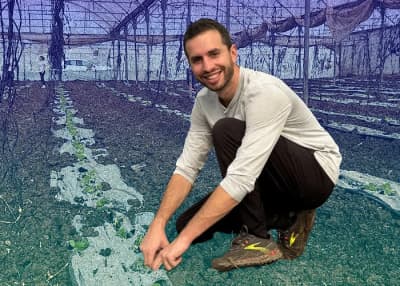

In the aftermath of the October 7th attacks, Birthright Israel was one of the few bridges connecting Israelis to Jews in the Diaspora. Although the signature 10-day trips were paused, Birthright Israel quickly launched its Volunteer Program, offering participants like me a way to support kibbutzim affected by the war.
Birthright Israel’s pivot deeply inspired me, prompting a career pivot of my own. Last month, I left behind a successful career in New England’s historic real estate sector, packed up my car, and moved to San Francisco to become Birthright Israel’s Regional Director for the Pacific Northwest. The spirit of Tikkun Olam guides my path forward. In this new role, I am eager to contribute to Birthright Israel's goal of bringing 200,000 participants to Israel by 2030.
Although I only began working at Birthright Israel last month, my connection to this amazing organization spans many years and multiple trips. In 2011, when demand was high and the waitlist for Birthright Israel was extensive, I applied three times before finally securing a spot on their coveted 10-day trip. This anticipation only intensified my excitement — I had been waiting my entire life to return to Israel.
I was born in Israel in the late 1980s to two American parents who were part of the vibrant Hashomer Hatzair Kibbutz movement. We left Israel when I was less than a year old, and I carried a deep yearning to return to my birthplace ever since. This year, as we celebrate Birthright Israel’s 25th anniversary, I think back to my own parents’ connection to Israel.
My parents' Israel story began in 1975. As teenagers, they met on an organized trip to Israel and fell in love — not only with one another, but also with the land of Israel itself. Both came from strong Zionist backgrounds. My mom often shared how, as a nine-year-old girl in the wake of the Six-Day War, she saw her grandfather celebrate the dawn of a new era. At that moment, she knew she was destined to live in Israel. My father shared similar dreams, inspired by the rugged kibbutzniks he idolized, who were the backbone of Israel’s agrarian society.
My sister and I grew up hearing stories about my parents' early days on the kibbutz after making Aliyah. Instead of classic children's books, we would beg our mom to tell us about her adventures in Israel in the late 1970s.
My grandfather further encouraged my Zionism over long games of chess and discussions of his favorite novel, The Source by James Michener. This story, told through the lens of an archaeological site in Israel, reveals a new chapter of Jewish history with each layer of earth. When I explored its iconic, historic sites on my first Birthright Israel trip in 2011, I felt as though I were stepping directly into the pages of The Source. Climbing the roughly 700 steps of Masada and driving up the winding mountain roads to the beautiful city of Tzfat brought those stories to life in a way I had never imagined. My grandfather passed away in 2012, and I am deeply grateful that he was able to witness my embrace of our shared love for Israel and Zionism.
My journey with Birthright Israel took on new meaning when I became a volunteer madrich, ultimately leading five Israel Outdoors trips. Within hours of leading my first trip in 2016, I knew my life’s trajectory had shifted. On my flight to Israel, I was seated next to Ezra, a young man pursuing his master’s degrees at NYU. Ezra was a student recruiter for the dual MPA and MA in Hebrew and Judaic Studies. By the end of our 11-hour flight, he had convinced me to apply to the master’s program in public policy. In 2017, I enrolled in NYU’s MPA program, specializing in Social Impact.
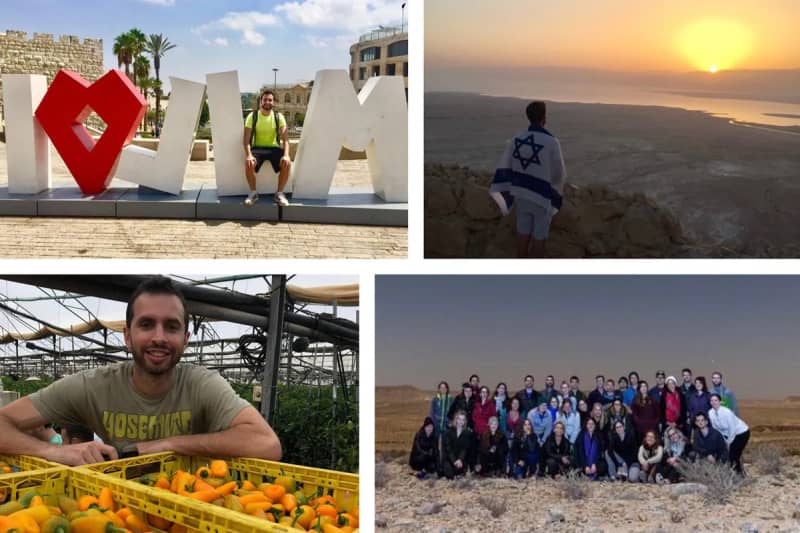
On my second trip as a madrich in early 2017, I experienced an unforgettable moment as my group neared the end of our tour of Yad Vashem. I’ll never forget hearing a sound so raw and piercing it stopped me in my tracks — it was like the cry of a wounded animal. Turning around, I saw one of our participants visibly shaken and breaking down in tears. Although I had only known this young man for a few days, I rushed to comfort him. I was not expecting the powerful bear hug that followed, as he clung to me, grappling with the overwhelming emotions stirred by the Holocaust exhibits. It was a moment of raw vulnerability that shows the deep impact Birthright Israel has on our participants.
During my third trip as a madrich, while our group was camping in Bedouin tents in the middle of the Negev Desert, I organized a night hike for about half the group to experience the breathtaking desert night sky, untouched by light pollution. It was an unforgettable experience — walking through the pitch-black desert, surrounded by the brilliance of glistening stars, and sharing the moment with my fellow Jewish American and Israeli peers. Again, I felt as if I were walking through the pages of The Source.
On my last trip as a volunteer madrich, I formed a close friendship with Itay, one of our Israeli Mifgash participants. We discovered a shared passion for surfing and traveling around the world, and after the trip, we stayed in contact. The following summer, while studying at Hebrew University as part of my NYU program, Itay and his fiancée Irena invited me to their wedding in Haifa. It was my first experience of the splendor and joy of an Israeli wedding — an unforgettable occasion.
Years later, in November 2023, I returned to Israel for my Birthright Israel Volunteer Program and flew in early to stay with Itay, Irena, and their young daughter. When I first stepped off that El Al plane at David Ben Gurion airport, I arrived in a land still reeling from the horrors of October 7th — a place that felt eerily like a ghost town. Israel, usually vibrant and teeming with life, was subdued, its collective grief palpable. Walking through the airport, I saw walls lined with posters of the faces of missing Israeli hostages. My heart sank as I remembered that, back home in California and New York, people were angrily tearing down similar posters.
Within hours of my arrival, air raid sirens began blaring as rockets were detected in northern Tel Aviv, where Itay and his family lived. I’ll never forget rushing into their bomb shelter and huddling in the dark with Itay, Irena, their toddler, and Irena’s Russian immigrant parents, who spoke little English. Despite — or perhaps because of — the fear and chaos of being in Israel during an active war, I felt an unbreakable bond with Itay, his family and Israelis in general.
Even the border guards at Ben Gurion Airport, typically known for their tough and intimidating demeanor, greeted me with something unexpected: warmth and a uniquely Israeli curiosity. "You came here now? To do what?" one guard asked. I explained I was there to pick cucumbers on Birthright Israel’s newly launched Volunteer Program. As his expression softened, I realized my presence as an American in a war zone was as meaningful to him as it was to me.
My new role at Birthright Israel in the Pacific Northwest represents more than a career change — it's a profound homecoming, as I return to the organization that had fundamentally shaped my Jewish identity. The decision feels like answering a sacred calling. After years of receiving so much from Birthright Israel, I can now finally give back during Israel's greatest hour of need.
Related Posts

Birthright Israel Summer 2024 Program Snapshot
Did you know that 13,500 Jewish young adults will take part in Birthright Israel programs this summe...

Birthright Israel Awards Distinguished Alumni in Houston
On January 16, 2025, Houston’s Jewish community gathered to celebrate the 25th anniversary of Birthr...

Discovering the Real Israel on Birthright Israel
Growing up in Massachusetts, my family went to temple every so often. I started going less and less ...
Meet Philly Regional Leadership Council Member & Birthright Israel Alumnus Jeffrey Green
Jeffrey Green is a Birthright Israel alumnus and trip staffer (madrich) who has made the program a p...